

Every project transforming lives today started in the same way: with a bold vision and a deep desire to solve a real problem. However, the journey from that initial inspiration to achieving lasting change in the market is full of uncertainties. For any technology-based initiative with a social impact mission, validating assumptions along the way is not an optional step. It is a key factor in determining the project’s viability.
On September 30, we experienced this process firsthand during the first Validation Lab of TechBloc4, the technology entrepreneurship ecosystem promoted by Tandem Social and Coopcat, with the support of Bloc 4, Barcelona City Council, the Government of Catalonia, and CEPES.
Entrepreneurship Often Means Venturing into Uncharted Territory
Eight diverse projects – ranging from digital platforms designed to support and dignify migration processes and tools to encourage storytelling, to democratic participation initiatives and support networks for social enterprises – found themselves at a crucial turning point. They had a clear purpose, but needed to ensure that their proposed solutions aligned with market realities and users’ actual needs.
Moving forward without validation exposes any team to the risk of investing time and resources in features or business models that may not address a genuine need. This is why validation serves as a tool for gaining clarity, reducing risks, and accelerating learning.
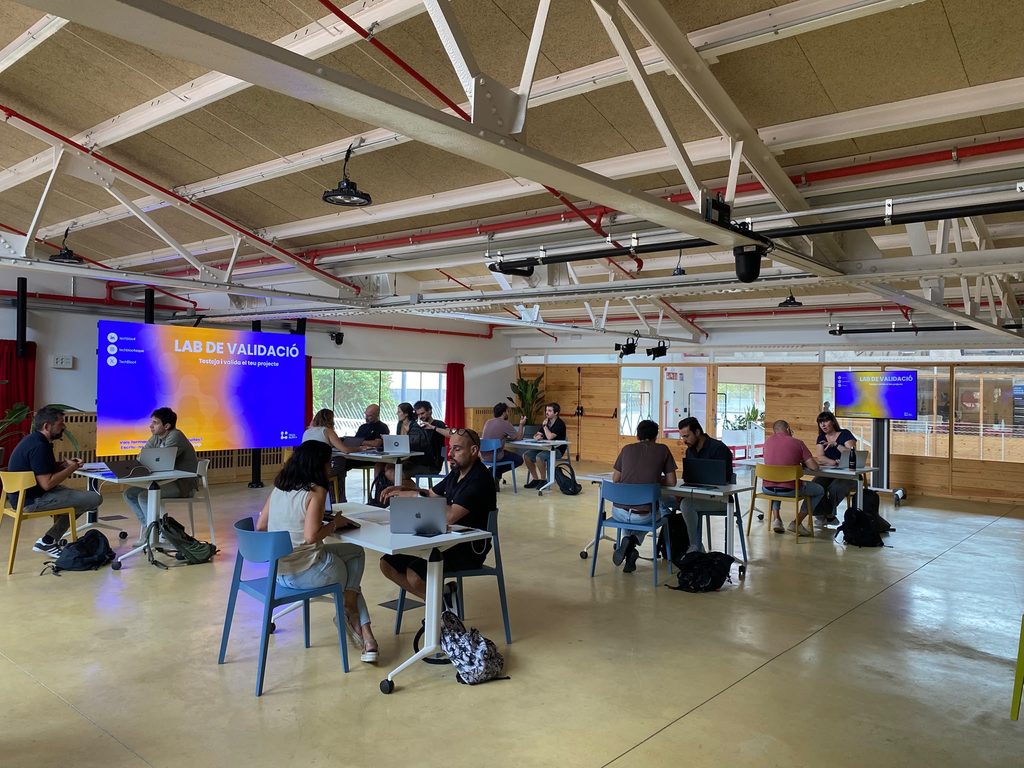
A Lab to Move Beyond Uncertainty and Build Confidence
The TechBloc4 Validation Lab provided an opportunity to approach validation from a comprehensive, integrated perspective, ensuring that technology remained connected to its underlying purpose. First, the focus was on business model viability, examining cost structures and value propositions to ensure long-term financial sustainability. This is an essential foundation for any social impact project seeking to avoid relying exclusively on short-term or one-off funding.
Next, participants explored their projects’ actual capacity to generate impact, engaging in a process of critical reflection to assess whether their solutions effectively addressed community needs and how the tangible changes they generated could be measured and quantified.
Finally, this analysis was connected to identifying each project’s technological needs, ensuring that technical architecture and digital development aligned with the initiative’s actual scope. The goal was to avoid unnecessary complexity while building scalable and accessible solutions from the outset.
Continuous validation enables projects to pivot at the right time, strengthen their competitive advantages, and launch initiatives with greater confidence and a stronger likelihood of success. At Tandem Social, we firmly believe that no project should have to navigate this process alone. Our mission is to provide strategic guidance, tools, knowledge, and connections to help turn socially driven ideas into high-impact realities.